Whispers Between Body and Matter: The Shape of Memory
Martin Heidegger famously proclaimed that “Language is the house of Being.” Yet today, we find ourselves cast into an era of profound homelessness.
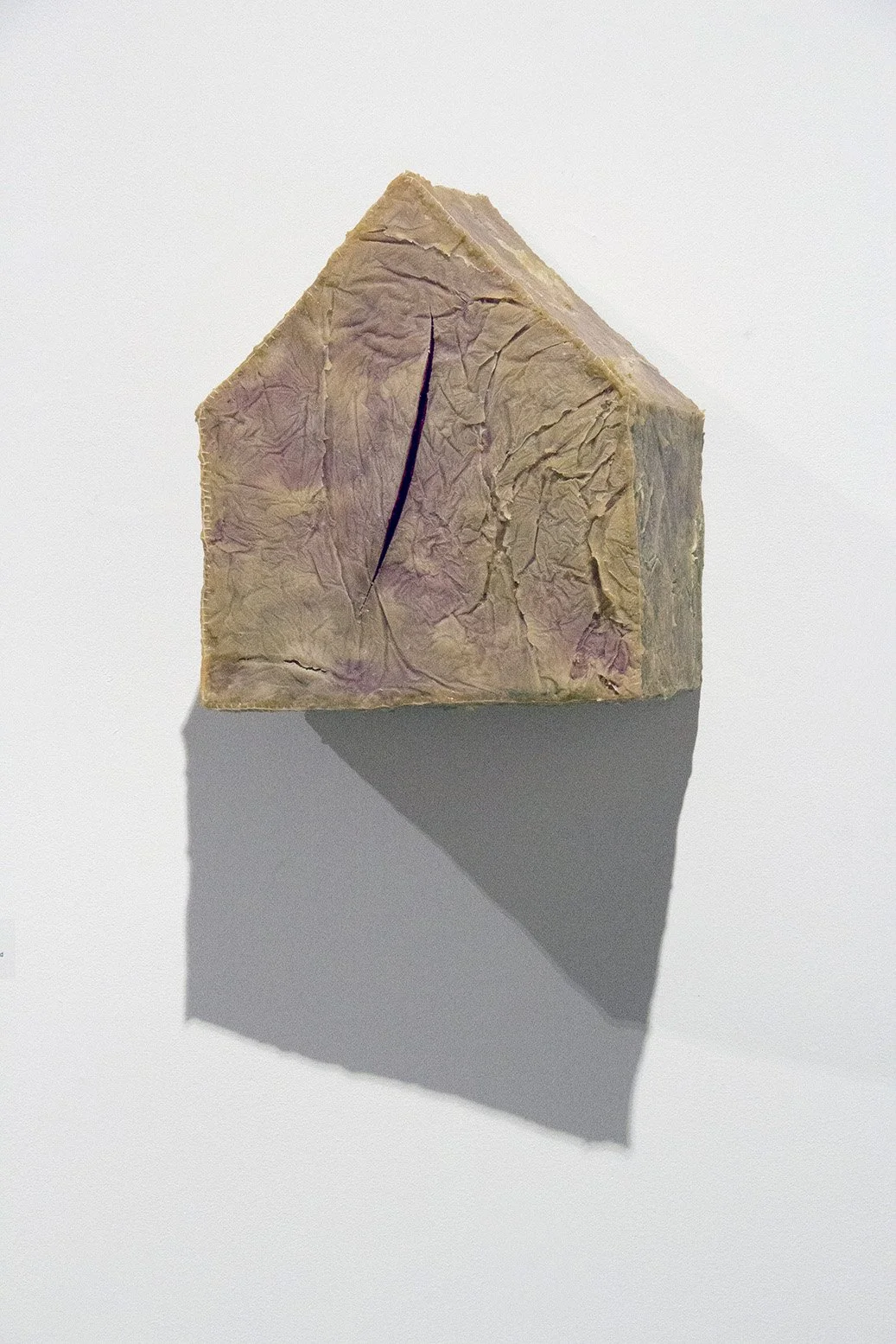
The arresting tongues upon these sculptures evoke an innate yearning and capacity for utterance. Yet when language withdraws, what lingers in the room is a deafening quietude: a silent violence. Here, the body becomes a site of transmutation, where inert matter opens onto the unnamable realm of memory. In Binod’s practice, matter proliferates through deliberate repetition, accumulating into an intentional excess. Hair, one of the body’s most regenerative traces, mirrors the ceaseless proliferation of remembrance. Red speaks of lacerated wounds and unquenched desire; white marks the residue of settled ash. These visceral physical presences compel us to ask: What does the body carry? And how, through time, do we carry the body?
An artist’s alchemy lies in allowing materiality to speak in its own voice. Yet when matter claims too much discursive space, viewers risk drifting into a chaotic din and losing their communion with the artist. Herein lies a quiet cruelty: to bring clarity to an ocean of possibilities, one must exercise severe restraint. Tracing Binod’s trajectory reveals a disciplined fidelity to his vision. Refusing the clutter of unrestrained sentiment, his recurring motifs coalesce into a singular, unmistakable visual syntax.
Rather than merely giving visible form to an incorporeal past, Binod reorganizes the traces that memory leaves in the body and in matter. Within an aura of quasi-religious solemnity, this very material redundancy is consecrated and transformed. Memory here does not retrieve what has been lost; instead, through the alchemy of physical traces, it comes into being anew, taking on a shape it has never before possessed.
Memory is never mere retrospection; memory is a material alchemy.
Xu Zhao